
Travel Companion
Alain de Botton, The Art of Travel

As I readied for my holiday trip to Japan a few months ago, I wanted a paperback or two to accompany me on the plane and into the hotel. Sure, many people download e-books, less to pack, but I wanted something tangible, something to carry. I meandered through the book store fiction sections, best sellers, my favorite authors, then through the non-fiction sections, memoir, business, self-help. Either in travel or self-help, I spotted The Art of Travel by Alain de Botton - of The School of Life. Just what I was looking for! (on a side note, if you have not heard of The School of Life, look it up, I highly recommend)
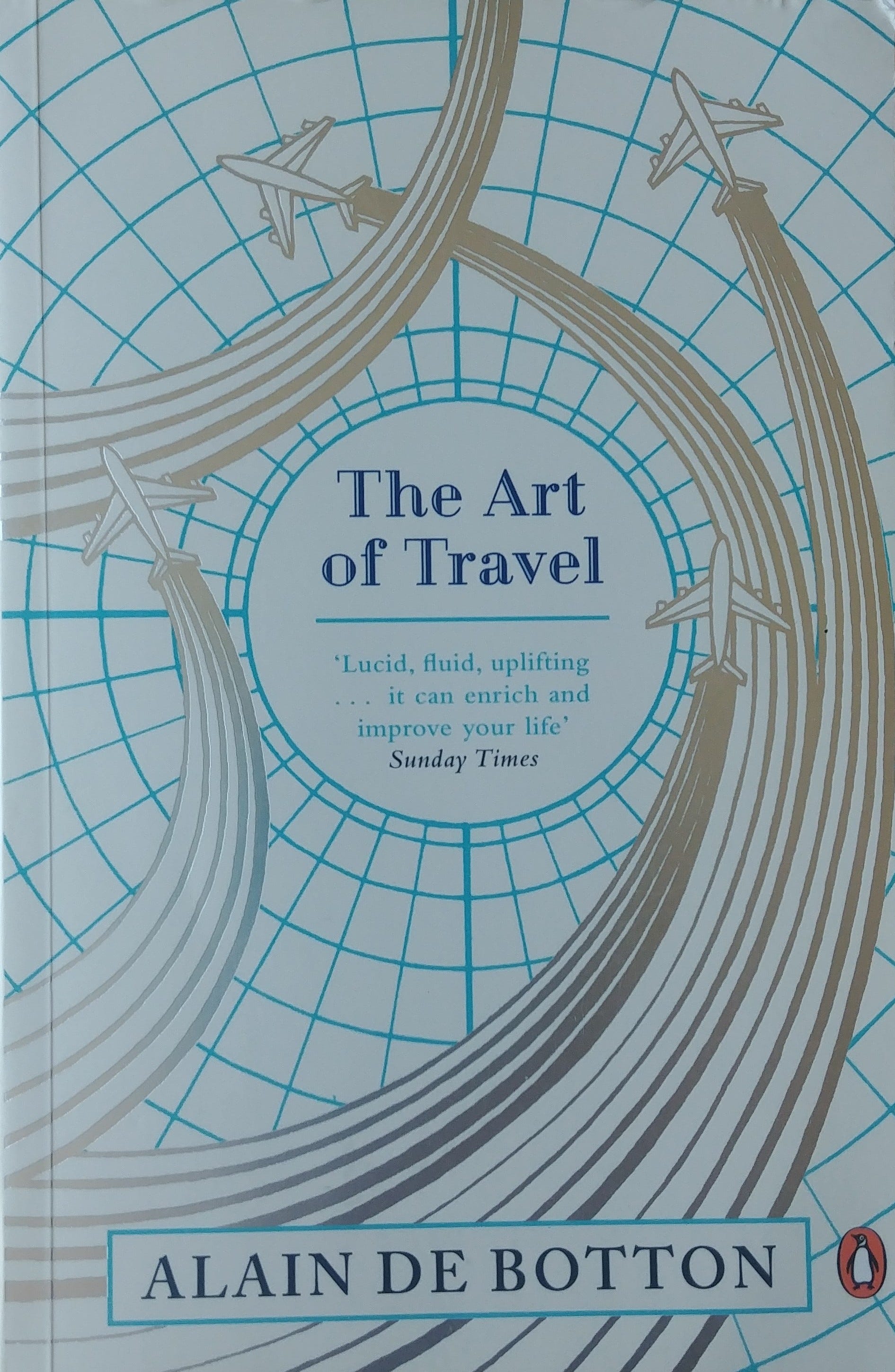
As I was making my way as a tourist in a foreign country, I tried to jot down my thoughts that might formulate themselves into this blog. Inevitably, as I read de Botton's chapters, he said it better. His writing is entertaining, well-informed, well-aligned. He has a knack that captures the elusive thought that, as I read his words, makes me wish that I had said it that way. I especially love the challenge of reading his complex sentences; he uses grammar and vocabulary to its highest extent and capacity, and I don't get enough of this type of well-educated reading elsewhere.
de Botton observes that one way to know our ideals and values is to be abruptly out of our comfort zone when we travel to a foreign land. I would add that there is an appeal to experience a different culture for this very reason. Some of their values might be an improvement over our own traditions; without having a comparative example as shown elsewhere when we travel, perhaps we would never explore the other options.
I laughed out loud at his revelation that despite the anticipation and expectations of what the perfect vacation might bring him, he realizes that he has brought himself, with all his usual hang-ups to his idyllic beach, and neither fluffy towels nor bright sun could overcome his own propensities.
I was examining my own tendencies while in Japan, where the culture is distinctly different than our western Canadian norm. It was lovely to be with polite and respectful people - as a tourist, I felt welcomed and safe, which is worth paying attention to in our current times. It was natural for me to exaggerate my usual mild-mannered Canadian woman politeness, as a stranger who prefers to travel without drawing attention to myself.
As a visitor to another country, I put in a lot of effort to find ways to blend in, to not make a fuss, to do my best to arrive informed and prepared. I brushed up on the phrases I know in Japanese for saying please and thank you. The example that I appreciated the most is the Japanese practice of turn-taking, of ensuring that there is an orderly queue, and moving forward in the narrow space, efficiently and without a rush, no pushing or crushing in the crowd.
As I age, and am more attached to the comforts of home, I am no longer a good traveler. Handling language barriers has improved with the ability to use Google Lens for sign or menu translations, and getting around is so much easier with Google Maps. On the one hand, I was pleased to see Starbucks everywhere. On the other hand, I was disappointed that large cities in Japan are similar to large cities at home.
As tourists, we made our way to the cultural sights to see historic temples, castles, and palaces for an hour or two at each site. We appreciated the Japanese gardens. We indulged in the range of Japanese cuisine and I ate the best cheese burger. After sightseeing, we took refuge from the hot summer weather in the underground train station shopping mall, located near the hotel. I tried other coffee shops, and inevitably gravitated to the familiar Starbucks.
As de Botton digs further into reasons for seeking out knowledge, he quotes Neitzsche who quoted Goethe in 1873, on taking a stand that everything we do, including travel, is for life-enhancing reasons. Gathering new information is not enough. We need to put facts into our context of meaning, what is essential or helpful, what makes a difference.
As a tourist, I could not integrate the vast Japanese history, the different eras, the historic rulers; the brief English descriptions could not do justice to the nuance. I merely settled on confirming what was not the same as our western histories, and although I had a few passing thoughts to look it up when I got home, I also soon realized that would not happen. I satisfied myself to having a momentary sense of awe at the majestic structures that represent Japan’s history and eastern traditions and otherwise, remain in ignorance about such a wealth of culture.
One thing that I did notice, and perhaps was a reflection of my own state, made apparent by being elsewhere, was how much of people's attention was directed to their phones. As a tourist, I used my technology to help me with language and directions, but otherwise, I wanted to see where I was going, to really look at the sights, to be present to what was going on around me. Others, both Japanese and tourists, were head-down, focused on their phones, which I took as a disadvantage of our current times.
People watching used to be about noticing other's liveliness, their animated conversations, taking cues from how others were interacting, wondering about what was going on that I might partake in. This time, people watching resulted in a disappointment that many of us are ignoring our surroundings in favor of what captures the attention on the palm sized computer.
And thus, I re-confirmed my reason for buying a paperback instead of loading up my phone with e-books. I made a conscious effort to limit my use of technology to maps and photos that were essential to the trip. I didn't want to bring the rest of my digital life with me, while abroad. I wanted to have a momentary foreign experience, to notice what was important to me while being unplugged.
Travel is a chance to affirm what is life-enhancing, while I was doing something unusual, having discomfort. I was pleased to have Alain de Botton's book with me, to help express in words what I was thinking and observing.
It's always enlightening to read de Botton's well-written essays and this book, The Art of Travel was a worthy travel companion.
Related Posts


